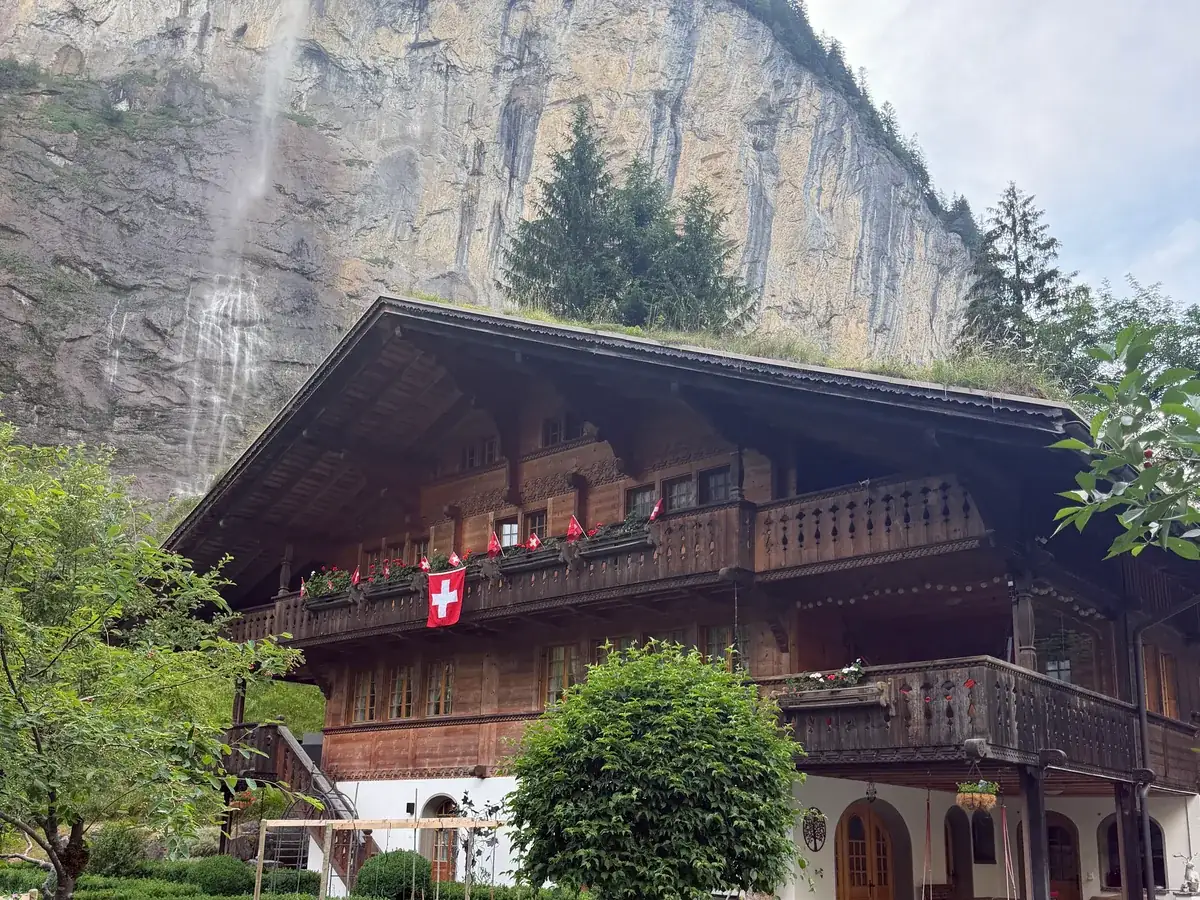
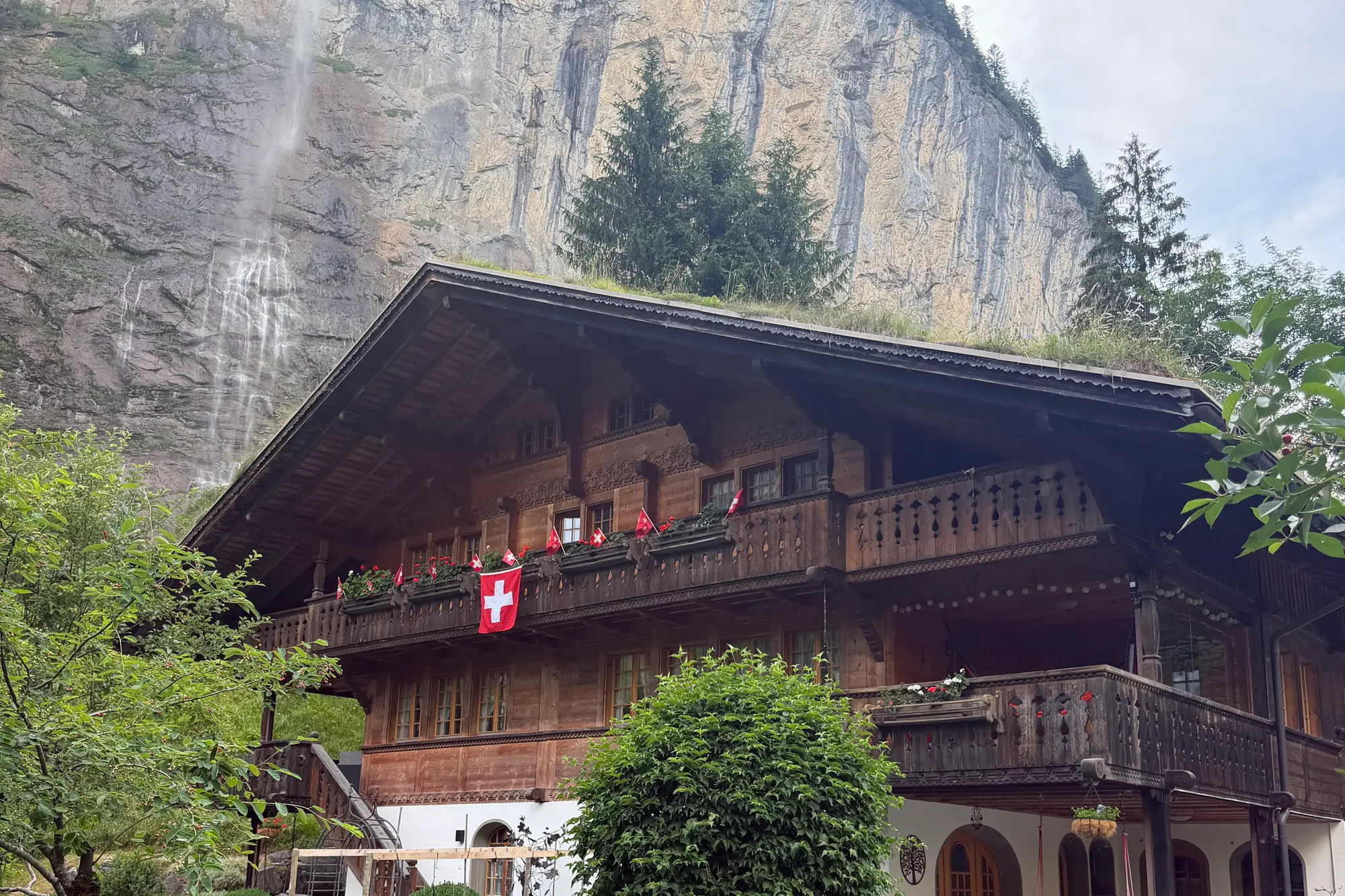
Lauterbrunnen valley floor with the Staubbach Falls dropping from sheer cliffs, Bernese Oberland, Switzerland
HERO, 2000×1100The Staubbach Falls above Lauterbrunnen village.

The valley · 72 waterfalls

The waterfalls of Lauterbrunnen

This valley holds the highest waterfall in Switzerland and the highest free-falling one, and they are two different falls. Which ones you can actually see, what they cost, and when to come.

Calendar/Waterfalls

Seventy-two waterfalls, and what that number actually means

Lauterbrunnen Tourism counts 72 waterfalls cascading over the rock faces into the valley, and the figure gets repeated everywhere without much explanation. Here is the honest version. Most of the 72 are seasonal: threads and ribbons that appear with the snowmelt or after heavy rain, and dry to nothing in a settled August week. Nobody has ever seen all 72 at once, and you will not either.

What you can do is see a good dozen of them in an afternoon, and name the big ones. That is what this page is for.

The valley holds two Swiss records, and they are different waterfalls

This is the detail almost everyone gets wrong, including most of the guides that rank above this page. The Staubbach is the highest free-falling waterfall in Switzerland, at 297 metres. The Mürrenbachfall, four kilometres down the same valley, is the highest waterfall in Switzerland full stop, at 417 metres. Both titles are real, both are in this valley, and they belong to two different falls about ten minutes apart by bus.

The Staubbach: free, and the first thing you see

The Staubbach drops 297 metres off the cliff directly above the village and is, per Lauterbrunnen Tourism, the highest free-falling waterfall in Switzerland. Free-falling is the technical bit that makes it look the way it does: the water leaves the rock at the top and touches nothing until it lands, so most of it has turned to drifting mist by halfway down. Staubbach means dust stream, and standing under it you understand the name.

It costs nothing and you cannot miss it. It is in front of you when you step off the train, it is behind the church, and it is in everyone's photograph. A path climbs from the village to a gallery at the base in about ten minutes, where you get in among the spray. The tourism board states that this trail is only open in summer and does not publish the dates, which move with ice and rockfall. Ask at the tourist office or look for the barrier rather than trusting a date you read online, this page included.

Walking down the valley: what you pass

The flat path from Lauterbrunnen towards Stechelberg is the best hour in the valley and it is where the 72 stops being an abstraction. Cliffs close in on both sides, and falls keep appearing: some permanent, some running only because it rained on Tuesday. Working down from the village you pass, among others, the Spissbach, the Buchenbach and the Ägertenbach on the western wall, with the Staldenbach and Mattenbach opposite.

A caveat worth having: published heights for these disagree sharply between sources, by hundreds of metres in some cases, so this page gives you the names and not invented numbers. They are on the Swiss national map if you want to follow along as you walk.

The Mürrenbachfall: the tallest in the country, and hardly anyone stops

At the far end of the walk, where the Mürrenbach meets the Lütschine beside the valley station of the Mürren cable car at Stechelberg, is the Mürrenbachfall. Its main drop is 417 metres, and on the 2009 survey figures it is the highest waterfall in Switzerland. The wider Mürrenbach system falls a good deal further again in stages above it.

The strange part is that thousands of people walk past it every day on their way to the cable car queue without looking up. It is directly above the car park. If you are heading to Schilthorn or Gimmelwald anyway, give it two minutes.

The Trümmelbach: ten waterfalls inside a mountain

The Trümmelbach is the one people do not expect. It is ten waterfalls inside the mountain, carrying the meltwater off the Eiger, Mönch and Jungfrau down a gorge the water has drilled through the rock, reached by a lift bored into the cliff that Lauterbrunnen Tourism describes as unique in Europe. It is loud, cold, wet and a little unnerving. Allow an hour and take a jacket.

SeasonOpening hoursAdultsChildren 6–15
April, May, June9.00–17.00from CHF 18from CHF 8
July, Augustlongest hours, biggest meltwater8.30–18.00from CHF 18from CHF 8
September, October, November9.00–17.00from CHF 18from CHF 8
December to MarchClosed for the wintern/an/a

Ten per cent off with the Lauterbrunnen Guest Card. Children under 4 and dogs are not admitted, for safety, which is worth knowing before you walk down with a pushchair. The exact spring opening and autumn closing dates shift with the weather each year, so confirm with the operator if you are coming in early April or late November.

Past the road: Gimmelwald, and the back of the valley

Two more are worth the effort if you have a day rather than an afternoon.

The Sprutz sits in the trees below Gimmelwald, off the path that climbs the eastern side, and is the one walkers find by accident and remember longest. It is not visible from the valley road.

Further back, where the valley ends and the road does not go, is the Schmadribach: a 200-metre single drop at 1,850 metres, fed off the ice at the head of the valley, below the Breithorn and the Gspaltenhorn. Joseph Anton Koch painted it in 1821 and it is the reason a certain kind of visitor comes here at all. You reach it on foot from Stechelberg, usually by way of Obersteinberg, and it is a full mountain day rather than a stroll: the signed Stechelberg to Schmadrihütte round trip runs to about 18 kilometres and seven hours. There is no entry fee and no handrail.

When to come, if the falls are the reason

Late May into June. The 72-waterfall valley is a snowmelt phenomenon and that is when the melt runs hardest: the cliffs stream with falls that are simply not there two months later, and the Trümmelbach is at its most violent because the glaciers feeding it are melting fastest. Our June guide covers that window, and May is the quieter, wetter, cheaper version of the same thing.

In winter you get the Staubbach and the Mürrenbach but not the Trümmelbach, which closes completely. That is not a reason to skip a winter trip, see Ski & Winter, but it is a reason not to build one around waterfalls.

Doing it on foot

The valley-floor path from Lauterbrunnen to Stechelberg takes in the Staubbach, most of the named falls above, the Trümmelbach entrance and the Mürrenbachfall at the end, in roughly three quarters of an hour of flat walking. It is pushchair-friendly and it is the single best introduction to the valley there is. Bus 141 runs the same route if you would rather walk one way only, and the full picture on moving around is in Getting Here.
Common questions

Waterfalls, answered

How many waterfalls are there in Lauterbrunnen?

Seventy-two, on Lauterbrunnen Tourism's own count. The honest caveat is that most of them are seasonal: threads that appear with the snowmelt or after heavy rain and dry to nothing in a settled August week. Nobody sees all 72 at once. You can comfortably see a dozen in an afternoon on the valley floor, and name the big ones.

What is the highest waterfall in Switzerland?

The Mürrenbachfall, in this valley, with a main drop of 417 metres. It stands where the Mürrenbach meets the Lütschine beside the valley station of the Mürren cable car at Stechelberg. Thousands of people walk past it to the cable car queue every day without looking up.

How tall is the Staubbach Falls?

297 metres, and it is the highest free-falling waterfall in Switzerland, which is a different record from the one the Mürrenbachfall holds. Free-falling means the water leaves the cliff at the top and touches nothing until it lands, which is what gives it the drifting, smoke-like plume. Staubbach means dust stream.

Is the Staubbach Falls free?

Yes. It drops off the cliff directly above the village, so you see it the moment you step off the train, from the main street, from the churchyard and from most of the valley floor. There is no gate and no ticket. Only the path up to the base is seasonal.

Can you walk behind the Staubbach Falls?

There is a path up to a gallery at the base where you get in among the spray, about ten minutes' climb from the village. Lauterbrunnen Tourism states that this trail is only open in summer. They do not publish the opening and closing dates, and the dates move with ice and rockfall, so check locally rather than trusting a date you read online, this page included.

Which waterfalls can you see on the walk to Stechelberg?

Starting from the Staubbach at the village, the western wall gives you the Spissbach, the Buchenbach and the Ägertenbach, with the Staldenbach and Mattenbach opposite, the Trümmelbach entrance about halfway, and the Mürrenbachfall at the end by the cable car station. Add a dozen unnamed seasonal falls after rain. Published heights for the smaller ones disagree between sources, so treat any number you read with suspicion.

Is the Trümmelbach Falls worth it?

If you have seen a waterfall from the outside and want to see one from the inside, yes. It is ten falls carrying the meltwater of the Eiger, Mönch and Jungfrau through a gorge inside the mountain, reached by a lift bored into the rock, which Lauterbrunnen Tourism calls unique in Europe. Allow an hour and take a jacket. It is loud, cold and wet in there.

When is the Trümmelbach Falls open?

April to November. Hours are 9am to 5pm in April, May and June, 8.30am to 6pm in July and August, then 9am to 5pm from September to November. It closes completely for the winter. The exact spring opening and autumn closing move with the weather each year, so confirm before a shoulder-season trip.

How much does the Trümmelbach Falls cost?

From CHF 18 for adults and from CHF 8 for children and teenagers aged 6 to 15, with 10% off if you hold the Lauterbrunnen Guest Card. Children under 4 and dogs are not admitted, for safety, which is worth knowing before you walk down with a pushchair.

What is the Schmadribach waterfall?

A 200-metre single drop at the head of the valley, at 1,850 metres, fed off the ice below the Breithorn and the Gspaltenhorn. Joseph Anton Koch painted it in 1821 and it is why a certain kind of visitor comes to Lauterbrunnen at all. You reach it on foot from Stechelberg, usually by way of Obersteinberg. The signed round trip is about 18 kilometres and seven hours, so it is a mountain day, not a stroll.

Can you see the waterfalls in winter?

The Staubbach and the Mürrenbachfall yes, and both for free: they run off the cliffs in full view of the valley floor all year and the path between the villages stays open. The Trümmelbach no, it is shut from roughly December to March. If the falls are the reason you are coming, come between late spring and autumn.

When are the waterfalls at their best?

Late May into June. The 72 figure is a snowmelt figure, and that is when the melt runs hardest: the cliffs stream with falls that are simply not there in a dry September. The Trümmelbach peaks for the same reason, because it drains the glaciers above and they melt fastest then.

Stay at the foot of the Staubbach Falls

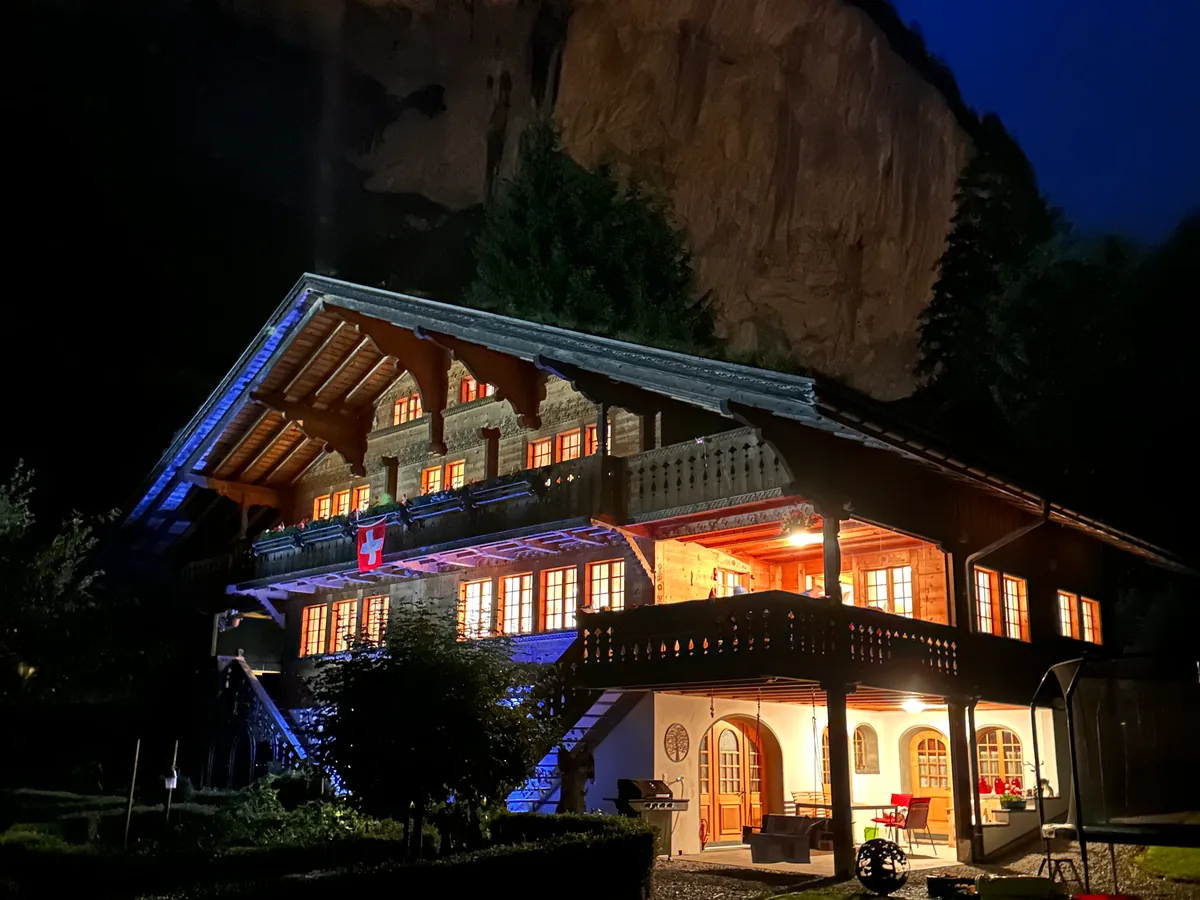
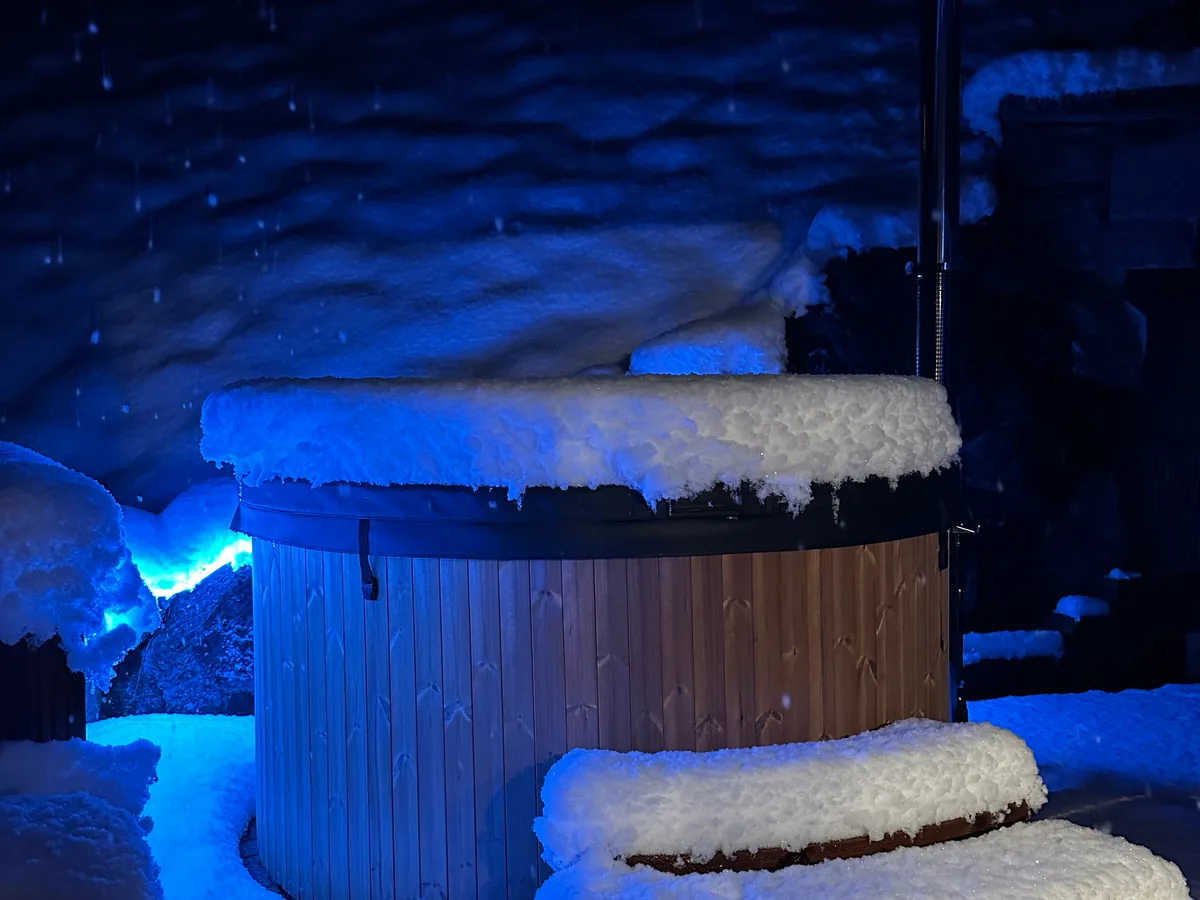
An apartment and two studios on the valley floor with the Staubbach in view, and the Trümmelbach a flat 45-minute walk away. The Apartment has its own private wood-fired hot tub.

The Apartment at Chalet Staubbach with private wood-fired hot tub and waterfall view
4:3, 1200×900The Apartment, your hot tub + waterfall photo
The Apartment
2 guests · the premium option
SummerCHF 350–420 (about $420–500)WinterCHF 250–335 (about $300–400)
The premium choice and the only one with its own private wood-fired hot tub, closest to the falls with a side terrace. A Top 1% home on Airbnb.
Private hot tubWaterfall viewTop 1% on Airbnb
View on Airbnb →
The Studio at Chalet Staubbach, Lauterbrunnen
4:3, 1200×900The Studio
The Studio
Full kitchen · best for longer stays
SummerCHF 210–250 (about $250–300)WinterCHF 165–210 (about $200–250)
The best pick for longer stays, with a full kitchen for self-catering, in the same prime valley-floor spot.
Full kitchenLonger staysValley-floor address
View on Airbnb →
The Nest studio at Chalet Staubbach, Lauterbrunnen
4:3, 1200×900The Nest
The Nest
Cosy · the budget option
SummerCHF 165–210 (about $200–250)WinterCHF 125–165 (about $150–200)
The smallest and cosiest of the three, not much bigger than a hotel room but with a great terrace. The budget way into a prime valley-floor location, ideal for short stays.
Great terraceBudget optionPrime location
View on Airbnb →

Nightly ranges for our own three places, before cleaning. What you actually pay moves with the dates, the length of stay and how far ahead you book, so treat these as the shape of it rather than a quote. Dollar figures are converted at 1 USD = 0.835 CHF, set 15 October 2026.

What the valley is doing this month

What’s open, what’s shut, what the weather and the trains are up to, and which weeks are quiet. One email, first of the month, written here.

One email a month. Unsubscribe in one click. We never pass your address on.